

Retinal Detachment
In a retinal detachment, the retina, the seeing layer at the back of the eye, comes away from the wall of the eye. It is an emergency. Repaired in time, most retinas can be put back in place and sight saved.
Flashes, a shower of floaters or a shadow? These need an eye check the same day. Call the branch now and tell them what you are seeing.
- Laser for a tear, surgery for a detachment
- The sooner it is treated, the better the sight
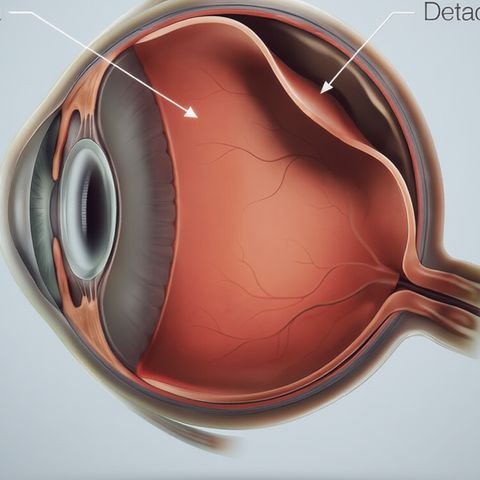

What is a retinal detachment?
The retina (आँख का पर्दा) is a thin layer that lines the inside of the back of the eye, like wallpaper. When it peels away, it stops working, and the part of your vision it served goes dark.
It usually starts with a small tear. As we get older, the jelly that fills the eye shrinks and can tug on the retina, causing flashes and floaters. Fluid then passes through the tear and lifts the retina off. Less often, scar tissue from diabetes pulls it away.
A tear caught early can often be sealed with laser in the clinic. Once the retina has detached, surgery is needed, and the sooner it is done, the better the chance of good sight, especially while the centre of the retina is still attached.
More likely with
- High minus glasses power (short sight)
- A detachment in the other eye before
- Retinal detachment in the family
- A hard blow to the eye or head
- Earlier eye surgery, including cataract surgery
- Advanced diabetic retinopathy
- Age over 50
Signs to watch for
-
Flashes of light
Brief flickers or streaks of light at the edge of vision, often easier to notice in the dark.
-
A shower of new floaters
Many new black dots, cobwebs or a smoky haze, appearing suddenly.
-
A shadow or curtain
A dark shadow spreading in from the side, top or bottom of your vision.
-
Blurred or wavy vision
Straight lines look bent, or the centre goes blurred, when the middle of the retina is affected.
Same day
No pain does not mean no problem
A retinal detachment does not hurt. Do not wait to see if it settles. Call the branch the same day, and avoid heavy work until you have been seen.
Call Patna branch nowHow it can look
Our Patna branch, as it may look to someone with this problem. Drag the handle to compare.

How we check
-
Retina check with drops
Drops widen the pupil, and the doctor examines the whole retina, pressing gently on the eyelid to see the far edges.
-
OCT scan
Shows whether the centre of the retina (the macula) is still attached.
-
Ultrasound (B-scan)
If blood or a cataract blocks the view, sound waves show whether the retina is in place.
-
Retina photographs
Record where the tears and the detachment are.
Treatment options
-
A tear, before it detaches
Laser or freezing for a tear
Laser, or a freezing probe, seals the edges of the tear so fluid cannot get under the retina. It takes a few minutes in the clinic.
-
Some small detachments
Pneumatic retinopexy
A gas bubble is injected into the eye to press the retina back into place, and the tear is then sealed with laser or freezing.
-
Some detachments, often in younger people
Scleral buckle
A soft band is stitched to the outside wall of the eye to push it against the tear. It stays in place for good and cannot be seen.
-
Most detachments
Vitrectomy
The jelly is removed, the retina is flattened and the tears are sealed with laser. The eye is then filled with gas, which slowly disappears, or with silicone oil, which is removed in a second operation a few months later.
Ayushman card and insurance
All three branches accept the Ayushman card (PM-JAY), and cashless treatment works with most insurance TPAs. Call the branch to check what is covered for your treatment.
From your call to surgery
-
Call the branch
Tell them you have flashes, floaters or a shadow. You will be asked to come in the same day.
-
Examination
Drops widen your pupil and the retina is examined, with a scan if needed. Come with someone, as your sight will be blurred.
-
Treatment
A tear may be treated with laser the same day. A detachment needs surgery as soon as possible, often within a day or two. The doctor explains which operation suits your eye.
-
After the operation
If gas was used, you may need to keep your head in a set position for several days. This keeps the bubble pressing on the tear, and it matters as much as the operation.
After surgery
What helps
- Keep the head position you were given, for as many hours a day as you were told.
- With gas in the eye, do not fly or travel up into the hills until the doctor says the gas has gone. The bubble swells with height and can raise the eye pressure dangerously.
- With gas in the eye, tell any doctor who plans to give you an anaesthetic about it first.
- Use the drops as prescribed, and wear the shield at night.
- Avoid heavy lifting and bending until the doctor says it is safe.
- Sight improves slowly, over weeks to months. Your glasses power is checked again later.
Call the branch if
- Pain gets worse, or you start vomiting
- Your sight gets worse after first improving
- You see new flashes, floaters or a shadow in either eye
Doctors who treat retinal detachment
Each doctor's profile lists their training and the days they see patients at each branch.
Questions people ask
Can a retinal detachment heal on its own?
No. Without treatment, a detached retina usually stays detached, and the eye can lose its sight for good.
Is every floater a sign of detachment?
No. Most people have a few floaters, and they are harmless. What matters is a sudden change: many new floaters, flashes or a shadow. That needs a check the same day.
Will my sight come back fully?
It depends on how long the retina was detached and whether the centre was affected. Many people get good reading sight back, but it can take months, and some blur may remain.
Can it happen in the other eye?
It can, so the doctor checks the other eye as well. Know the warning signs, and act quickly if they appear.
How long will I need to keep my head down?
Usually from a few days to a week or two, depending on the gas used and where the tear is. The doctor will tell you exactly.
This page explains retinal detachment in general terms. The doctor who examines you will tell you what suits your eyes. Some procedures are done at one branch only, so the branch will tell you where yours takes place.
Questions about retinal detachment?
Leave a number, we will call you
Tell us a little about the problem and which branch suits you. Someone from that branch will call you back. Email is optional.
Prefer to talk now? Call a branch directly.