

Amblyopia Lazy eye
Amblyopia, or lazy eye, is when one eye does not develop full sight in childhood, even with glasses, because the brain learns to rely on the other eye. It is very treatable when found early, so every child should have an eye check before starting school.
- Works best when started early in childhood
- Glasses and patching, no surgery for most
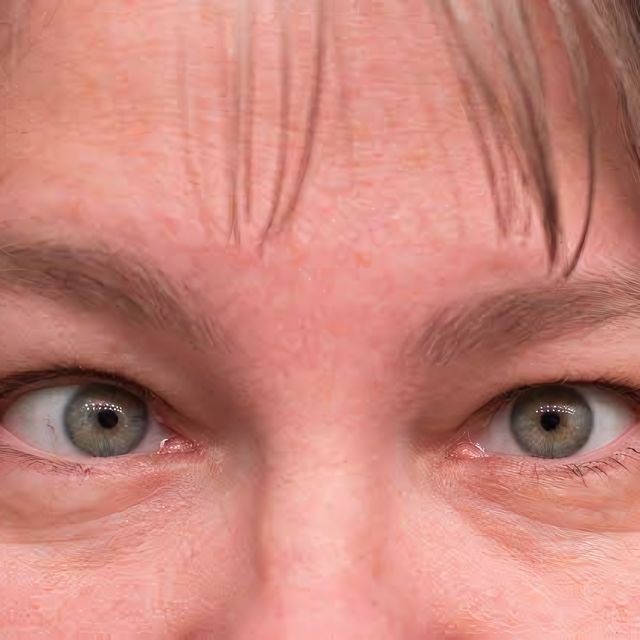
What is amblyopia?
Sight is not fully formed at birth. Through early childhood, the brain learns to see by using clear pictures from both eyes. If one eye sends a blurred or turned picture, the brain starts to ignore it, and that eye never learns to see sharply.
The eye itself often looks normal, and the child does not complain, because the other eye sees well. Many cases are found only when the good eye is covered during a check-up.
Treatment works by making the brain use the weaker eye. It works best in young children and becomes harder after about seven or eight years of age, although older children can still improve.
Common causes
- A squint, where one eye turns
- Unequal glasses power between the two eyes
- High glasses power in both eyes
- Something blocking sight, such as a cataract in a child or a drooping eyelid
Signs to watch for
-
Often no sign at all
The child sees well with the good eye and does not notice anything wrong.
-
An eye that turns
A squint is one of the most common causes.
-
Upset when one eye is covered
A child who fusses, pushes your hand away or peeps when the good eye is covered.
-
Tilting the head or squinting
Shutting or narrowing one eye to see better.
-
Clumsiness
Bumping into things on one side, or poor judgement of depth.
How it can look
Our Patna branch, as a lazy eye may see it when the good eye is covered. Drag the handle to compare.

How we check
-
Vision test for each eye
With pictures, symbols or letters to suit the child's age.
-
Glasses power with drops
Drops relax the eye's focusing so the true power can be measured. They take up to an hour to work.
-
Squint check
Covering each eye in turn to look for a turn.
-
Eye health check
To rule out a cataract, a drooping eyelid or a problem in the retina.
Treatment options
-
The first step
Glasses
The right glasses, worn all day, are often enough to improve the weaker eye over a few months.
-
Most common
Patching
A patch over the stronger eye for some hours a day, usually two to six, makes the weaker eye work. Close work such as drawing or reading during patch time helps.
-
Instead of a patch
Atropine drops or a filter
A drop in the stronger eye, or a special filter on its glasses lens, blurs that eye so the weaker eye does more of the work. Useful for children who will not keep a patch on.
-
Where needed
Treating the cause
An operation for a childhood cataract, a drooping eyelid that blocks sight, or a squint, along with patching.
Ayushman card and insurance
All three branches accept the Ayushman card (PM-JAY), and cashless treatment works with most insurance TPAs. Call the branch to check what is covered for your treatment.
Your child's first visit
-
Vision test
Each eye is tested on its own, with games or pictures for young children.
-
Drops
Drops are put in to measure the true glasses power. Bring a snack and a toy, as they take up to an hour to work.
-
Examination
The doctor checks for a squint, the health of each eye and the glasses power.
-
Treatment plan
You get the glasses prescription and, if needed, a patching plan: how many hours a day, and for how long.
-
Follow-up
Visits every 6 to 12 weeks to check progress and adjust the patching.
Making treatment work at home
What helps
- Put the patch directly on the skin, not on the glasses, so the child cannot peep.
- Make patch time fun: drawing, puzzles, colouring, or reading together.
- Keep the glasses on all day, every day, unless told otherwise.
- Tell the teacher, so the child gets support at school.
- Do not stop patching early once the sight improves. The doctor reduces it slowly, so the eye does not slip back.
- Keep every follow-up visit.
Call the branch if
- The skin under the patch becomes sore or broken
- Your child says the stronger eye has become blurry
- With atropine drops: a flushed face, fever or unusual restlessness
Book at any of our three branches
Call the branch nearest to you. They will book your check-up with the right doctor.
- Patna +91 92644 44457 Open today 9 AM to 7 PM
- Gaya +91 91289 03497 Open today 8:30 AM to 7 PM
- Hajipur +91 92644 44459 Open today 9 AM to 8 PM
Questions people ask
When should my child's eyes be checked?
An eye check before starting school is a good idea for every child, and sooner if you notice a squint, if lazy eye or squint runs in the family, or if the child was born early.
Is it too late after age 8?
Treatment works best in young children, but older children and even teenagers can improve. It is always worth a check.
How long does treatment take?
Usually several months, sometimes longer. Most children improve steadily with glasses and regular patching.
Can patching harm the good eye?
Not when it is done as advised. The doctor checks both eyes at every visit for this reason.
Do eye exercises or video games help?
Some newer games and programs are used along with patching, but glasses and patching remain the main treatment. Ask the doctor before trying any.
This page explains amblyopia in general terms. The doctor who examines you will tell you what suits your eyes. Some procedures are done at one branch only, so the branch will tell you where yours takes place.
Questions about amblyopia?
Leave a number, we will call you
Tell us a little about the problem and which branch suits you. Someone from that branch will call you back. Email is optional.
Prefer to talk now? Call a branch directly.