

Diabetic Retinopathy
Diabetes can damage the tiny blood vessels of the retina, the seeing layer at the back of the eye. It usually causes no trouble until it is advanced. A yearly retina check finds it early, when laser or injections work best.
- A retina check every year with diabetes
- Laser and injections when needed

What is diabetic retinopathy?
The retina (आँख का पर्दा) lines the back of the eye and turns light into signals for the brain. It is fed by very fine blood vessels. Years of high blood sugar weaken these vessels, so they leak fluid and blood, or close off.
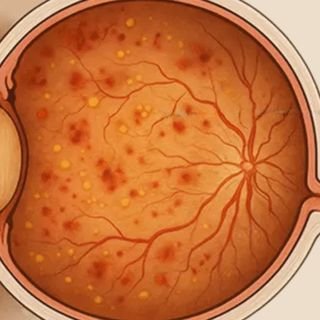
In the early stage there are small bleeds and spots that you cannot feel or see. Later, fluid can collect in the macula, the centre of the retina that you use for reading and faces, and blur your sight. In the advanced stage, fragile new vessels grow, bleed inside the eye and can pull the retina away.
Anyone with diabetes can get it, whether they take tablets or insulin. The longer you have had diabetes, and the higher your sugar, the higher the risk. Good control slows it down, and timely treatment saves sight in most people.
Higher risk with
- Diabetes for many years
- Sugar that stays high (a high HbA1c)
- High blood pressure
- High cholesterol
- Kidney disease from diabetes
- Pregnancy, in women who already have diabetes
- Smoking
Signs to watch for
-
Often nothing at all
Your sight can be perfect while the retina is already damaged. This is why checks matter.
-
Blurred or wavy vision
Straight lines look bent, or reading becomes hard, when fluid collects in the centre.
-
Floating spots or strings
Dark spots, cobwebs or floaters can be small bleeds inside the eye.
-
Dark or empty patches
Parts of what you look at seem missing or shadowed.
-
Faded colours
Colours look washed out.
Same day
Call the branch the same day if
- Your sight suddenly drops in one eye
- A shower of new floaters or a red haze appears
- A shadow or curtain spreads across your vision
How it can look
Our Patna branch, as it may look to someone with this problem. Drag the handle to compare.

How we check
-
Vision test
Reading the chart with each eye in turn.
-
Retina check with drops
Drops widen the pupil so the doctor can see the whole retina. Your sight stays blurred for four to six hours, so bring someone with you and do not drive.
-
OCT scan
A painless scan that shows swelling in the centre of the retina, often before you notice it.
-
Retina photographs and FFA
Photographs record changes over time. For FFA, a dye is injected into a vein in the arm to show vessels that leak or are blocked.
Treatment options
-
For everyone
Sugar, blood pressure and cholesterol
The base of all treatment, done with your diabetes doctor. For many adults the HbA1c target is around 7% or lower, but your doctor will set yours.
-
Swelling in the centre of the retina
Injections into the eye
Anti-VEGF medicines or steroids are injected into the numbed eye in a clean room. It takes a few minutes, and is usually repeated every month at first.
-
Leaking spots or new vessels
Laser treatment
Laser seals leaking spots, or treats the outer retina so it stops making fragile new vessels. It is done in the clinic and may need more than one sitting.
-
Bleeding or a pulled retina
Vitrectomy
An operation to clear blood from inside the eye and release scar tissue that pulls on the retina.
Ayushman card and insurance
All three branches accept the Ayushman card (PM-JAY), and cashless treatment works with most insurance TPAs. Call the branch to check what is covered for your treatment.
A retina check for diabetes
-
Bring your reports
Your latest sugar reports (including HbA1c), your list of medicines and your glasses.
-
Vision test and drops
After the vision test, drops widen your pupils. They take 20 to 30 minutes to work.
-
The examination
The doctor looks at the whole retina with a bright light and a lens. An OCT scan or photographs may be added.
-
Your result
You are told the stage of retinopathy and when to come back: once a year if all is well, or sooner if you need treatment.
Protecting your sight
What helps
- Have a retina check at least once a year, even if you see well.
- Keep your sugar, blood pressure and cholesterol in the range your doctor advises.
- Take your diabetes medicines regularly, and do not stop them on your own.
- Stop smoking.
- If you have diabetes and become pregnant, have your retina checked early in the pregnancy, and again as advised.
- After an injection, use any drops given, do not rub the eye, and keep it clean for a few days.
Call the branch if
- Your sight suddenly drops
- You see many new floaters or a red haze
- After an injection, pain, redness or blurring gets worse over the next few days. This is rare but needs treatment the same day.
Doctors who treat diabetic retinopathy
Each doctor's profile lists their training and the days they see patients at each branch.
Questions people ask
I see clearly. Do I still need a retina check?
Yes. Diabetic retinopathy often causes no change in sight until it is advanced. A check with drops is the only way to know.
When should my first check be?
For type 2 diabetes, as soon as it is diagnosed. For type 1, within five years of diagnosis. After that, at least once a year, or as often as the eye doctor advises.
Are the injections painful?
The eye is numbed with drops first, so most people feel only a little pressure for a moment. The eye may feel gritty for a day.
Can new glasses fix it?
No. Glasses correct focus, not damage to the retina. Blurred sight in someone with diabetes needs a retina check.
Will treatment bring my sight back?
Treatment aims to stop further loss. Many people with swelling in the centre see better after injections, but damage that has been there a long time may not fully recover.
This page explains diabetic retinopathy in general terms. The doctor who examines you will tell you what suits your eyes. Some procedures are done at one branch only, so the branch will tell you where yours takes place.
Questions about diabetic retinopathy?
Leave a number, we will call you
Tell us a little about the problem and which branch suits you. Someone from that branch will call you back. Email is optional.
Prefer to talk now? Call a branch directly.