

Cornea
The cornea is the clear front window of the eye. Infections, injuries, keratoconus and scars can cloud it or change its shape. Most problems are treated with drops, special lenses or a small procedure, and a badly damaged cornea can be replaced with a transplant.
- From eye infections to corneal transplant
- Keratoconus care
- Eye injury? Come the same day
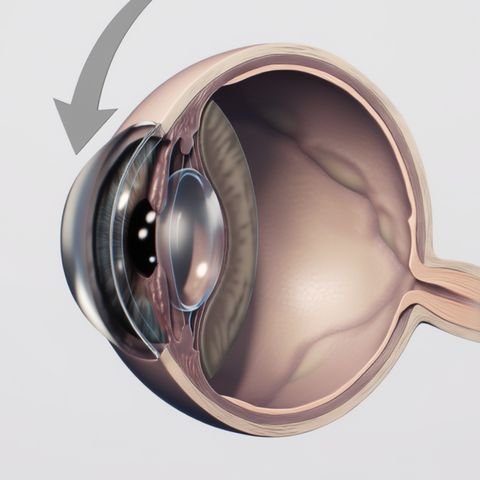



What is the cornea?
The cornea is the clear dome over the coloured part of your eye. It lets light in and does most of the focusing, so it has to stay clear and evenly curved. It is also very sensitive, which is why even a speck of dust hurts.
Because it sits at the front, it takes the most damage: infections, scratches, chemical splashes and dryness. Some problems start from within, such as keratoconus, where the cornea slowly thins and bulges into a cone shape, usually from the teenage years.
Care ranges from a few days of drops to long term treatment. A painful red eye with blurred sight should always be seen quickly, because a corneal ulcer can scar the eye within days.
Cornea problems we treat
- Corneal ulcers and infections
- Keratoconus
- Corneal scars
- Dry eye and allergic eye disease
- Pterygium
- Swelling of the cornea after eye surgery
- Inherited conditions such as Fuchs dystrophy
- Injuries, foreign bodies and chemical burns
Signs to watch for
-
Pain or a gritty feeling
As if something is stuck in the eye.
-
Redness and watering
Often with a discharge or sticky eyelids when there is an infection.
-
Light hurts
Bright light feels painful or makes you shut the eye.
-
Blurred or hazy vision
From swelling, a scar or a change in the shape of the cornea.
-
A white spot on the eye
A white or grey patch on the clear part can be an ulcer or a scar.
-
Glasses power changing fast
Especially cylinder power in a teenager or young adult, which can be a sign of keratoconus.
Same day
Come the same day if
- Something hits or enters the eye, or a chemical splashes into it. First wash the eye with plenty of clean water for at least 15 minutes.
- You wear contact lenses and the eye turns red and painful
- A white spot appears on the eye, or your sight drops quickly
How it can look
Our Patna branch, as it may look to someone with this problem. Drag the handle to compare.

How we check
-
Slit lamp examination
A microscope with a fine beam of light shows each layer of the cornea. A drop of yellow dye lights up scratches and ulcers.
-
Corneal topography
A painless scan that maps the shape and thickness of the cornea. It finds keratoconus early.
-
Specular microscopy
Counts the cells on the inner layer that keep the cornea clear. Useful before cataract surgery or a transplant.
-
A sample for the lab
For a serious infection, a tiny sample is taken with numbing drops, to find the germ and choose the right medicine.
Treatment options
-
Infections and inflammation
Medicines
Antibiotic, antifungal or antiviral drops, sometimes every hour at first, with drops for pain and dryness. Using them exactly as told is what saves the eye.
-
Keratoconus
Special contact lenses
Rigid (RGP), hybrid or scleral lenses smooth out an uneven cornea and give sharp sight when glasses cannot.
-
Keratoconus that is getting worse
Corneal cross-linking
Vitamin drops and a measured dose of ultraviolet light stiffen the cornea, so keratoconus stops getting worse. It works best when done early.
-
Pterygium
Pterygium removal
The fleshy growth is removed and the area is covered with a thin graft of the eye's own tissue, which lowers the chance of it coming back.
-
Badly scarred or swollen cornea
Corneal transplant
The damaged cornea is replaced with a clear donor cornea from an eye bank. Depending on the damage, the full thickness (PK) or only the inner layer (DSEK, DMEK) is replaced.
Ayushman card and insurance
All three branches accept the Ayushman card (PM-JAY), and cashless treatment works with most insurance TPAs. Call the branch to check what is covered for your treatment.
Your first visit
-
Tell us what happened
When it started, any injury, contact lens use, and every drop you have used, including ones from a chemist and home remedies.
-
The examination
Numbing drops and a yellow dye, then a slit lamp check of every layer of the cornea.
-
Tests if needed
A scan of the cornea's shape, or a small sample for the lab in a serious infection.
-
Your treatment plan
Most patients start drops the same day. For an ulcer, you come back often in the first days, so the doctor can see it healing.
Looking after your cornea
What helps
- Use every drop exactly as prescribed, and finish the course even if the eye feels better.
- Do not use steroid drops, old drops or home remedies without a doctor's advice.
- Do not rub your eyes, especially if you have keratoconus or allergies.
- If you wear contact lenses, never sleep in them, never rinse them with tap water, and take them out if the eye turns red.
- Wear protective glasses when working with tools, crops or chemicals.
- After a transplant, keep every follow-up visit. The new cornea needs drops for many months.
Call the branch if
- Pain or redness increases
- Your sight gets worse
- After a transplant, the eye turns red, sensitive to light or blurred. This can be rejection, which is treatable if caught early.
Doctors who treat cornea problems
Each doctor's profile lists their training and the days they see patients at each branch.
Questions people ask
Can I treat a red eye with home remedies?
Please do not. Home remedies can carry germs into the eye and turn a small scratch into an ulcer. Wash the eye with clean water and see a doctor.
Can keratoconus be cured?
It cannot be reversed, but cross-linking can stop it getting worse, and special contact lenses give good sight to most people. The earlier it is found, the more sight is saved.
Where does a donor cornea come from?
From people who pledged to donate their eyes after death. The cornea is tested and stored by an eye bank. One donor can give sight to two people.
Will a corneal transplant work for me?
It depends on why you need it. The doctor will explain the chances for your eye, and how long the wait for a donor cornea may be.
Does pterygium always need surgery?
No. A small pterygium can be watched and eased with lubricating drops. Surgery is advised if it grows towards the centre, blurs your sight or keeps getting red.
This page explains cornea problems in general terms. The doctor who examines you will tell you what suits your eyes. Some procedures are done at one branch only, so the branch will tell you where yours takes place.
Questions about cornea problems?
Leave a number, we will call you
Tell us a little about the problem and which branch suits you. Someone from that branch will call you back. Email is optional.
Prefer to talk now? Call a branch directly.